



Destination
Bhutan’s capital lies in a high Himalayan valley along the Wang Chhu — a city without traffic lights, where prayer wheels turn beside government offices and forest trails begin at the edge of town. From Babesa, at the southern gateway to the valley, its dzongs, passes and markets are all within easy reach.

The Capital
Thimphu is small enough to explore in a few days and rich enough to fill a lifetime. The great seated Buddha looks out over Babesa from the hillside above; the city centre, with its dzong, chorten and riverside market, is ten minutes’ drive away.
Sacred landmarks
Dzongs, stupas and mountain passes at the spiritual heart of the capital.
One of the largest seated Buddha statues in the world, gilded in bronze and gold, looks out over the southern entrance to the valley — and over Babesa. Come early for quiet, or at dusk when the statue glows above the city lights.
Nearby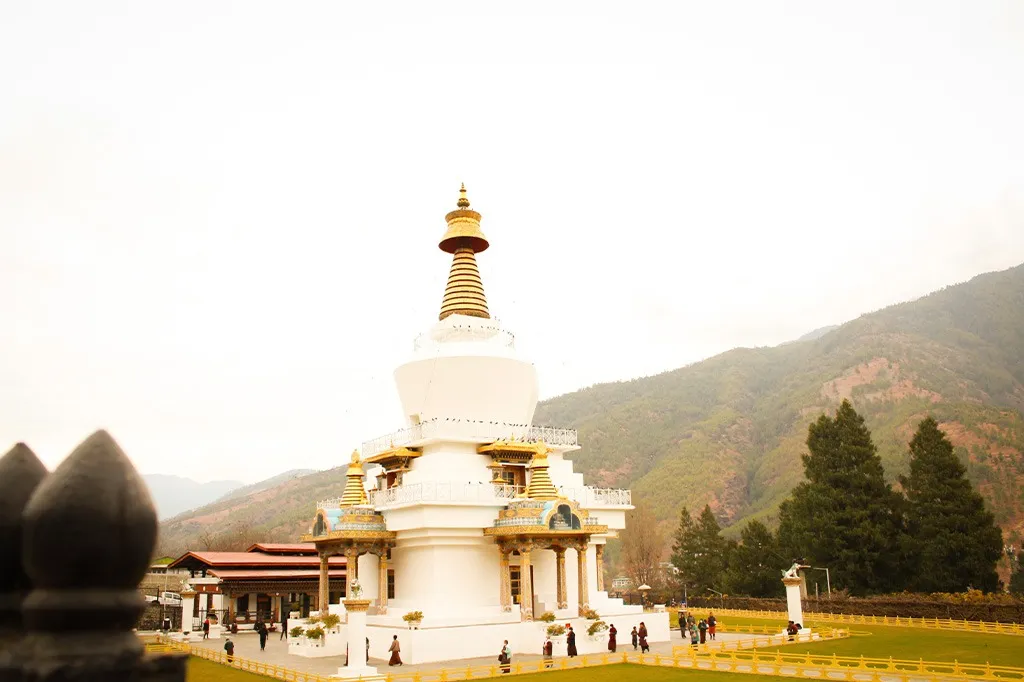
Built in memory of the Third King, the white-and-gold chorten is circled from dawn until dark by locals spinning prayer wheels and counting beads. Join the walk clockwise — it is one of the most authentic moments in the city.
In Thimphu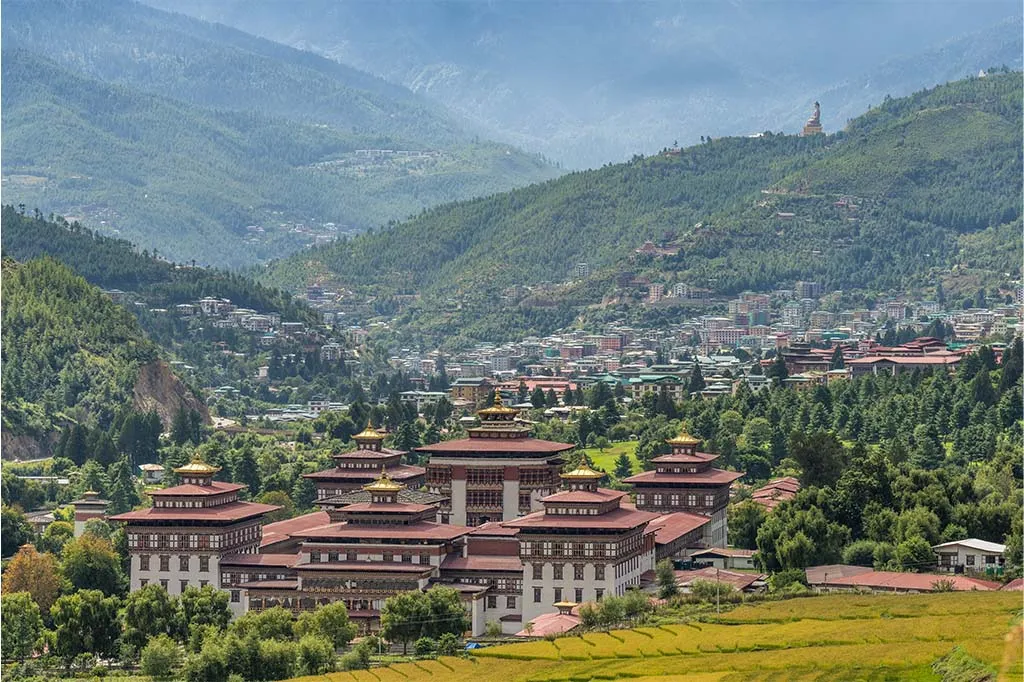
The great whitewashed dzong on the banks of the Wang Chhu houses the throne room, government offices and the summer home of the central monk body. Visitors are welcome in the evening, when the flag-lowering ceremony takes place.
In Thimphu
At 3,100 m on the road to Punakha, 108 chortens stand among prayer flags. On a clear day — most often between October and February — the snow peaks of the eastern Himalaya line the horizon.
19 km · 33 min
Nature & outdoors
Forest trails, open parks and Bhutan’s national animal — minutes from the city.
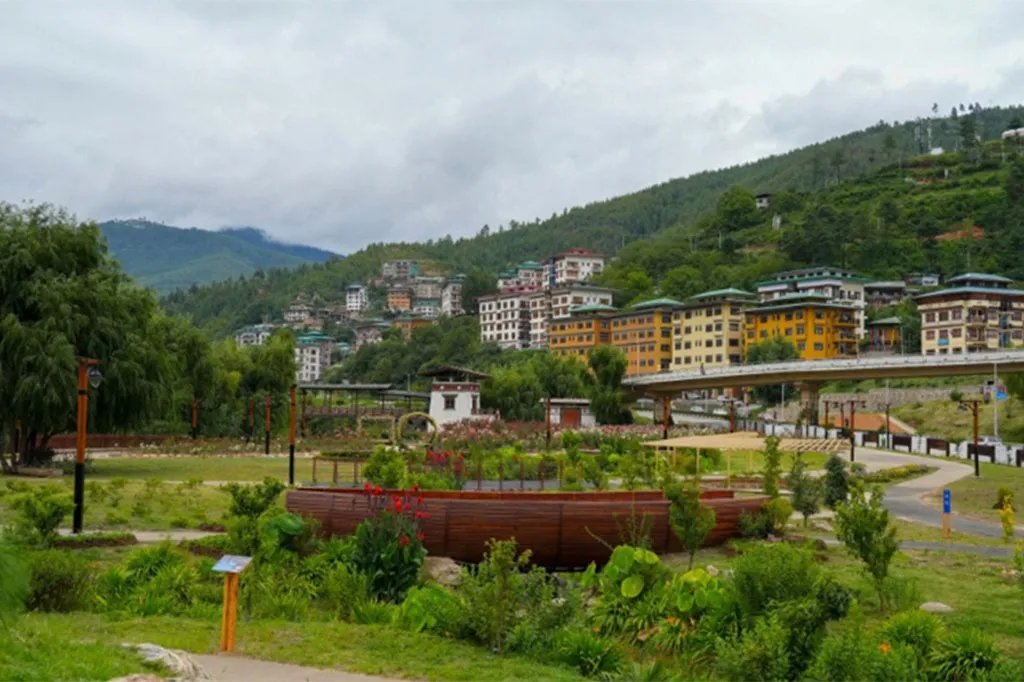
Landscaped paths, open lawns and a children’s play area make this riverside park an easy, unhurried outing — ideal for a morning stroll or an afternoon with the family.
6.5 km · 12 min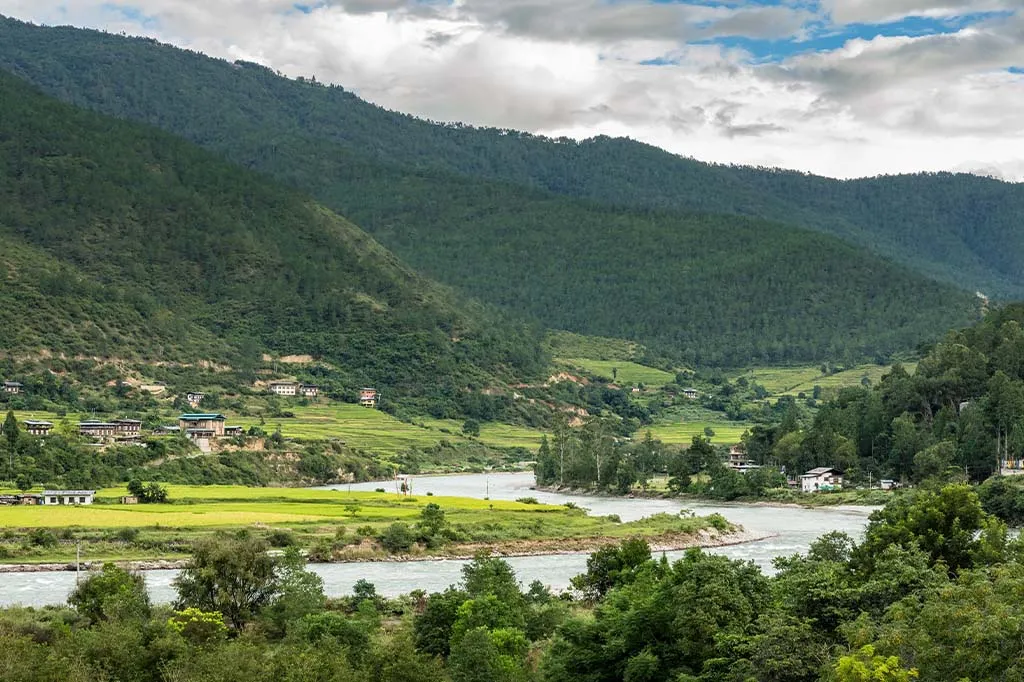
Stretching north from Thimphu to the Tibetan border, the park shelters snow leopards, red pandas and blue sheep, and is crossed by some of the country’s great treks. Our concierge can arrange day hikes and guides.
5.6 km · 13 min
A forested hillside reserve where you can see the takin — a gentle, curious creature that looks part goat, part cow — in a natural setting above the city.
11 km · 26 min
Culture & local life
Weaving, museums, markets and archery — the everyday craft and character of Thimphu.

Galleries of royal and ceremonial textiles sit beside working looms, where weavers create intricate kira and gho patterns by hand. A beautiful introduction to Bhutan’s most celebrated art.
In Thimphu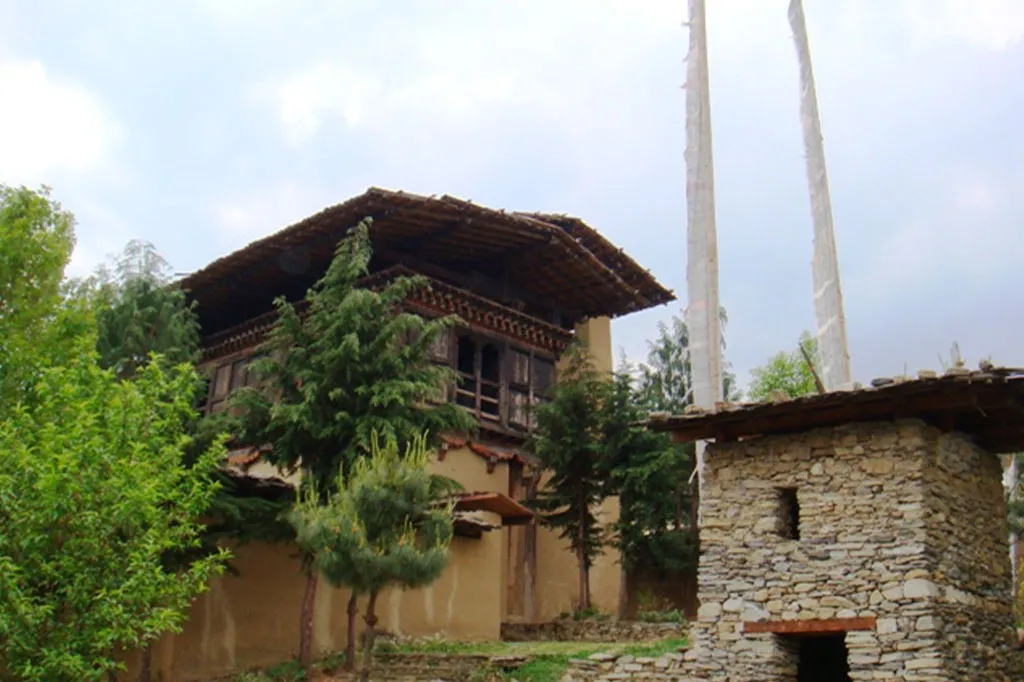
A restored three-storey farmhouse, furnished as it would have been a century ago, with traditional kitchens, grain stores and household tools — and seasonal demonstrations of rural crafts.
In Thimphu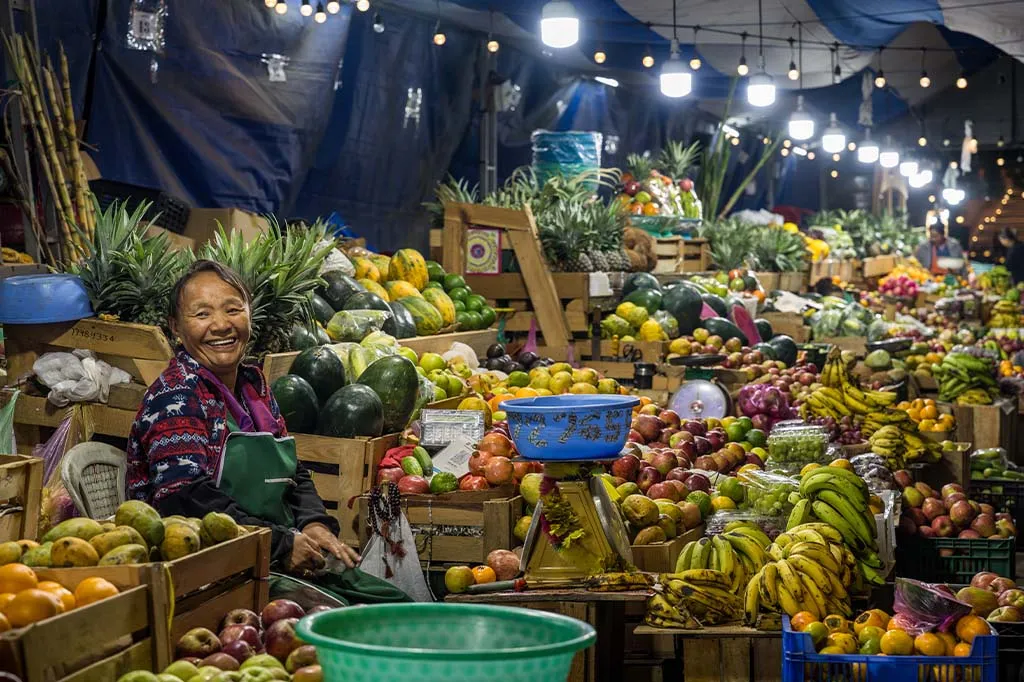
Two floors of chillies, mountain cheese, red rice and fresh produce from across the valleys, with handicraft stalls across the cantilever footbridge. Busiest — and liveliest — from Friday to Sunday.
In Thimphu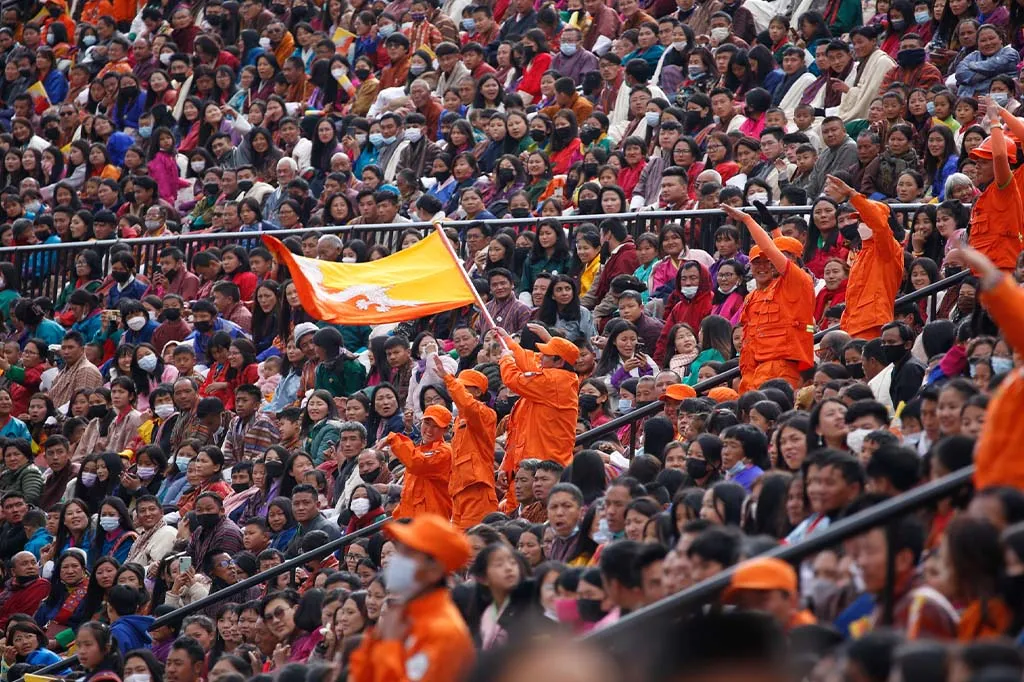
The national stadium and its neighbouring archery ground are where you can watch Bhutan’s national sport — with targets 145 metres away, singing, dancing and good-natured teasing between teams.
In Thimphu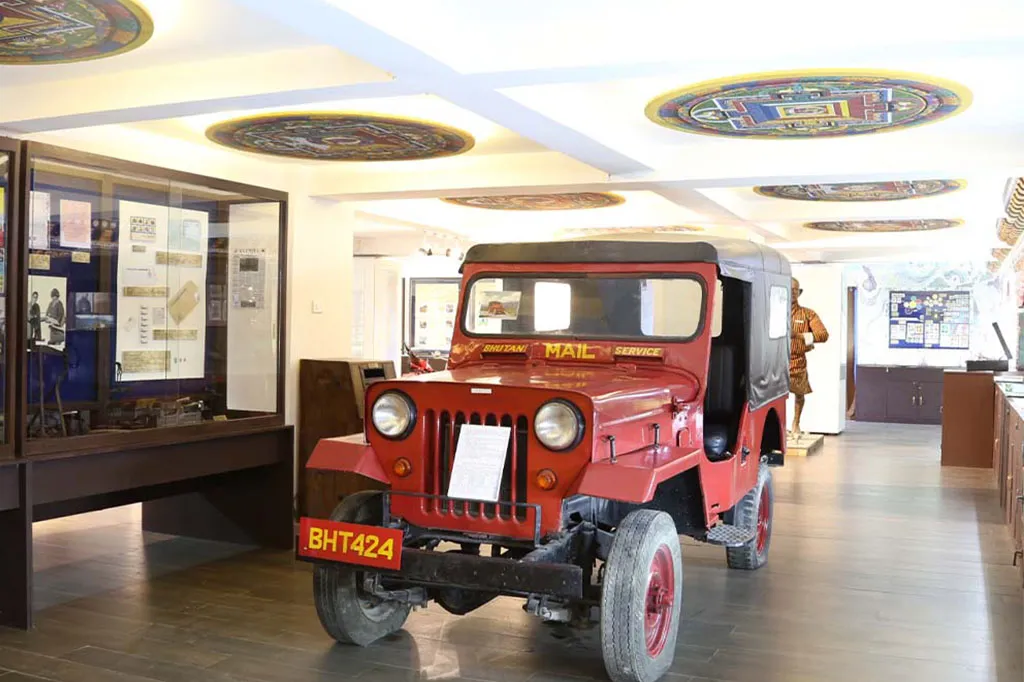
From runners carrying mail over mountain passes to the world-famous talking-record and 3D stamps, the museum tells the story of Bhutan through its post — and you can print your own personalised stamp.
In Thimphu
Getting Here
Paro International Airport, Bhutan’s gateway, is about an hour’s drive along the valley road — and Babesa is the first neighbourhood of Thimphu you reach. We can meet you at arrivals with a private car.